Optical Material for ITER First Mirror
Z.Azdad Möri ,L. Mosera, R. Steinera, L. Marota and E. Meyer
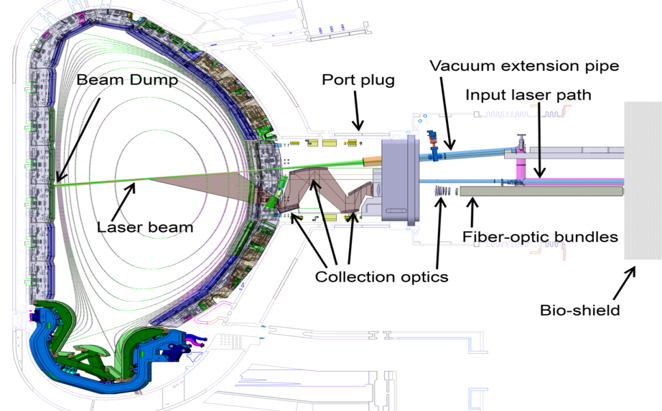
In the ITER fusion reactor, metallic first mirrors (FMs) used in optical diagnostic systems are positioned in close proximity to the plasma. As a result, they are subject to both erosion and, more significantly, deposition. Being the first element in the optical path, these mirrors are especially vulnerable to contamination from materials such as beryllium and tungsten originating from the main wall. This contamination can significantly degrade the mirrors' reflectivity.
One of the most promising in situ techniques for removing these deposits is plasma sputtering. This study presents the results of plasma cleaning conducted on different films, specifically Al₂O₃ and Al-W. It also explores the properties of Al/ZrO₂ thin films used as potential first mirror coatings, which have shown encouraging performance.
Using a 13.56 MHz radio frequency plasma, we successfully demonstrated the removal of 25 nm films under various conditions. The cleaning effectiveness was assessed using reflectivity measurements, scanning electron microscopy (SEM), and X-ray photoelectron spectroscopy (XPS).
The selection of materials used as coatings for FMs must meet several criteria, including high stability under neutron bombardment and excellent reflectivity in both the visible and infrared ranges. Zirconium, recognized as one of the most radiation-resistant ceramics, is therefore being evaluated as a protective layer for aluminum-coated stainless steel (SS) mirrors intended for ITER diagnostics.